
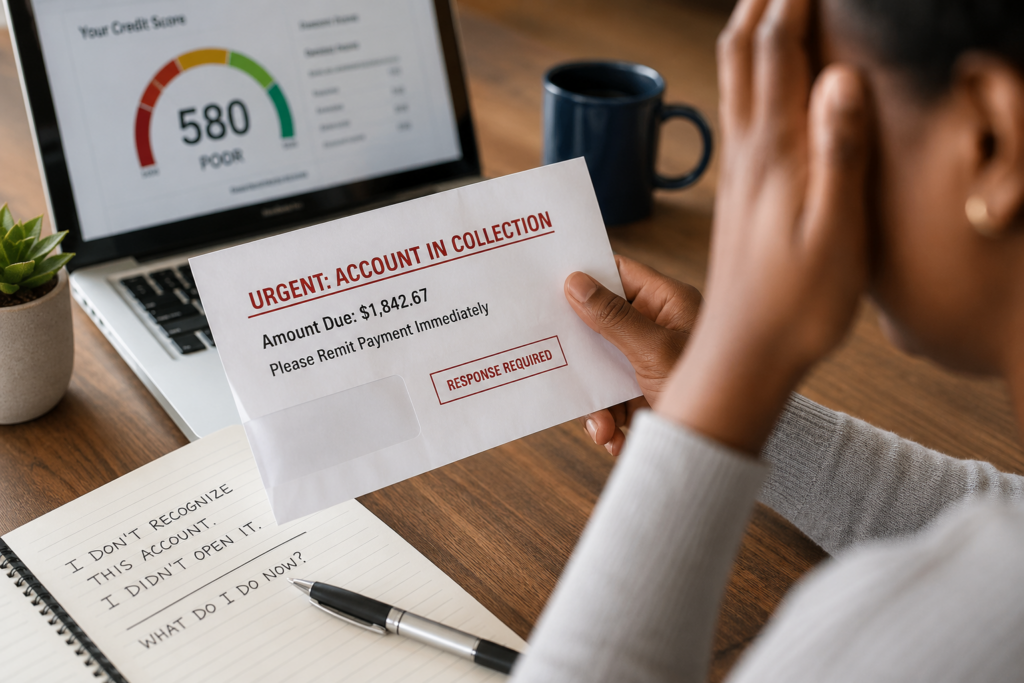
Imagine opening your mailbox and finding a debt collection notice for an account you’ve never seen before.
You don’t recognize the creditor. You never opened the account. Yet the collection agency claims you owe hundreds—or even thousands—of dollars.
Unfortunately, this scenario is becoming increasingly common.
At Credit Law Center, we regularly help consumers who discover they’ve become victims of identity theft or inaccurate credit reporting only after receiving a collection notice. The good news is that you have rights, and acting quickly can help protect your credit and your financial future.
Why Am I Receiving a Collection Letter for Someone Else’s Debt?
Receiving a debt collection notice doesn’t automatically mean you owe the debt.
In many cases, the account was opened fraudulently using stolen personal information. Identity thieves can obtain names, Social Security numbers, dates of birth, and addresses from data breaches or other sources and use that information to open new credit accounts.
Once an account becomes delinquent, lenders often sell the debt to third-party collection agencies for a fraction of its original value. Those agencies use databases, public records, and skip tracing tools to locate the person whose information is associated with the account—which could be you, even if you never opened it.
Because these debts are often sold multiple times, the same fraudulent account may continue resurfacing with different collection agencies long after you’ve disputed it.
Identity Theft Is Driving More Collection Disputes
The Consumer Financial Protection Bureau (CFPB) has reported a significant increase in consumer complaints involving attempts to collect debts people don’t owe. In 2025, complaints about collecting debts not owed increased by approximately 115% compared to the previous two-year average.
Many of these consumers believed the accounts resulted from identity theft or fraud.
Unfortunately, many victims don’t realize their identity has been compromised until the collection letters begin arriving.
Don’t Pay a Debt You Don’t Recognize
Many people panic when they receive a collection notice.
They worry about lawsuits, damaged credit, or endless phone calls and consider paying the debt simply to make it disappear.
That can be a costly mistake.
Paying a fraudulent debt may make it harder to dispute later and could unintentionally acknowledge responsibility for an account that isn’t yours.
Instead, take a step back and investigate before sending any money.
Know Your Rights Under Federal Law
The Fair Debt Collection Practices Act (FDCPA) provides important protections when dealing with third-party debt collectors.
After their initial communication, a debt collector must send you a written validation notice explaining:
- The amount of the debt
- The name of the creditor
- Your rights to dispute the debt
Once you receive that notice, you generally have 30 days to dispute the debt in writing.
If you dispute the debt within that timeframe, the collector must stop collection efforts until it verifies the debt.
It’s important to remember that while the FDCPA primarily applies to third-party debt collectors, other federal laws—including the Fair Credit Reporting Act (FCRA)—may provide additional protections when inaccurate information appears on your credit reports.
If Identity Theft Is Involved, Act Quickly
If you believe the account resulted from identity theft, don’t wait.
You should:
- File an Identity Theft Report through IdentityTheft.gov.
- Send copies of that report to the collection agency and the original creditor.
- Dispute the fraudulent account with Equifax, Experian, and TransUnion.
- Place a fraud alert or credit freeze on your credit reports to help prevent additional fraudulent accounts from being opened.
Taking these steps creates documentation that can help you remove fraudulent accounts and protect your credit moving forward.
Medical Collections Require Extra Attention
Not every unexpected collection notice is identity theft.
Medical bills frequently end up in collections because of insurance processing delays, billing mistakes, or coding errors.
Before paying a medical collection, request:
- An itemized bill
- An Explanation of Benefits (EOB) from your insurance company
- Confirmation that the balance is actually your responsibility
Many medical collection accounts can be resolved once billing errors are corrected.
Never Ignore a Lawsuit
Even if the debt is completely fraudulent, never ignore court papers.
Failing to respond by the court deadline could result in a default judgment against you.
If you’ve been sued over a debt you don’t owe, speaking with an experienced consumer protection attorney as soon as possible can help you understand your options and protect your rights.
Credit Monitoring Can Help You Catch Fraud Earlier
While no service can completely prevent identity theft, monitoring your credit reports can alert you to:
- New accounts opened in your name
- Hard credit inquiries
- Changes to your credit profile
The earlier you discover fraudulent activity, the easier it often is to stop the damage before an account reaches collections.
Credit Law Center Can Help
Receiving a collection letter for a debt you don’t owe is frustrating—but you don’t have to handle it alone.
Whether the problem stems from identity theft, inaccurate credit reporting, or improper collection activity, you have legal rights.
At Credit Law Center, we help consumers challenge inaccurate accounts, dispute credit reporting errors, and hold companies accountable when they violate federal consumer protection laws.
If you’ve received a collection notice for an unfamiliar debt, don’t assume it’s your responsibility. Review the notice carefully, dispute inaccurate information promptly, and seek legal guidance if your rights have been violated.
Protecting your credit today can save you significant time, money, and stress tomorrow.
