
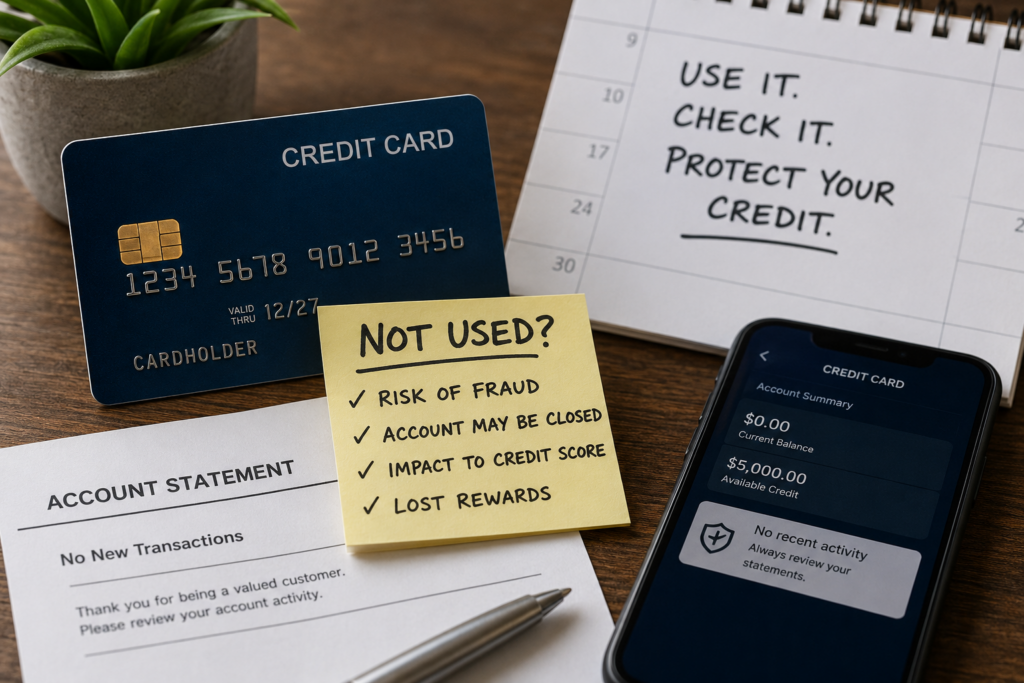
At Credit Law Center, we regularly hear from clients who opened a card for a great sign-up bonus, used it just long enough to earn the reward, and then quietly stopped touching it. It’s a common habit, but it’s worth understanding what actually happens to a credit card that sits unused. In many cases, the issuer will eventually close the account, and an inactive card also leaves you more exposed to fraud that can go unnoticed and damage both your credit and your finances.
Nothing dramatic happens if a card goes unused for a month. But letting it sit idle indefinitely is a different story, and it’s one that can catch people off guard.
The Risk of Overlooking Fraudulent Activity
The biggest danger of an unused card isn’t the card itself, it’s what stops happening around it. Once you’re no longer using a card regularly, you also tend to stop checking its statements. That gap in monitoring means fraudulent charges can go unnoticed for weeks or months, and the longer that activity goes undetected, the more damage it can do to your credit and your wallet.
The Risk of an Issuer Closing Your Account
Beyond fraud, there’s a structural risk: the issuer itself may close an inactive account.
Inactivity on its own typically doesn’t hurt your credit score. But if a lender notices that inactivity and shuts the account down, your score can take a hit. That’s because losing an available credit line changes your credit utilization ratio, the percentage of your total available credit you’re actually using at any given time.
The impact is even greater if the closed card is one of your oldest. Length of credit history makes up 15% of your FICO score, and while a closed account in good standing can still count toward your credit history for up to 10 years, its closure gradually lowers the average age of your accounts, which can weigh down your score over time.
Closure can also mean forfeiting any rewards you’ve built up, such as airline miles tied to that account.
Will You Be Charged for Not Using a Card?
Issuers used to be able to charge inactivity fees for cards that went unused. The Federal Reserve banned that practice in 2010, so you no longer need to worry about a penalty simply for not swiping a card.
That said, if the card carries an annual fee, that fee still applies whether you use the card or not.
How Long Before an Inactive Card Gets Closed?
There’s no industry-wide rule dictating when, or whether, an issuer will close an account for inactivity. A month or so of non-use generally isn’t cause for concern. But if you’re going longer than that, it’s worth contacting your issuer directly to understand their policy so a closure doesn’t catch you by surprise. Practices vary significantly between issuers, with some closing accounts after just six months to a year of inactivity, and others leaving dormant accounts open indefinitely.
How to Keep a Credit Card Active
If you want to preserve an account, the answer isn’t to use it constantly, it’s to use it just enough. Occasional, deliberate use combined with monthly statement checks for fraud strikes the right balance.
One reliable method is attaching a single recurring charge to the card, such as a streaming subscription or a cellphone bill, and paying it off automatically each month. Setting up that kind of automated charge keeps the account genuinely active without requiring ongoing attention.
Another approach we often recommend is dedicating one card to a specific recurring expense, like gas, and paying the balance in full every month. Either strategy keeps the account active, protects your credit history, and minimizes the risk of an unwelcome surprise from your issuer.
This information is provided for general educational purposes and does not constitute legal or financial advice. If you have questions about how account closures or credit reporting issues affect your specific situation, Credit Law Center can help you understand your options.
