

At Credit Law Center, we regularly hear from consumers whose financial lives have been disrupted by inaccurate information appearing on their credit reports. While federal law gives consumers the right to dispute reporting errors, many discover that correcting those mistakes can be far more difficult than it should be.
One recent example involved a consumer whose credit score dropped dramatically after a six-figure student loan debt was mistakenly attributed to her credit report. Despite providing documentation showing the loan belonged to another person and obtaining confirmation from the loan servicer that she was not responsible for the debt, the account remained on her report. As a result, her ability to qualify for a home loan was severely impacted.
Situations like this highlight a growing concern in the credit reporting industry: consumers often face significant obstacles when attempting to correct inaccurate information, even when they have substantial evidence supporting their claims. This is precisely why hiring a Law Firm allows for the opportunity to sue for relief if incorrect reporting is not being actively investigated by the bureaus. 33% of our clients walked away from our services with settlement checks due to the lack of bureaus failure to investigate disputes.
The CFPB’s Changing Role
For years, the Consumer Financial Protection Bureau (CFPB) served as an important layer of accountability between consumers and credit reporting agencies. Through its complaint portal and enforcement authority, the agency pressured companies to investigate disputes and address reporting errors. Consumers frequently turned to the CFPB when traditional dispute channels failed.
However, recent changes in federal oversight have altered that landscape. Since early 2025, the CFPB’s regulatory and enforcement activities have been significantly reduced. Staffing cuts, suspended investigations, and the withdrawal of certain enforcement actions have raised questions about the level of oversight facing major credit bureaus.
Data from consumer complaint records suggests that some credit reporting agencies have become less likely to provide relief to consumers after complaints are filed. While one of the three major credit bureaus has continued operating under a consent order requiring reforms and regulatory oversight, others have seen a notable decline in the percentage of disputes resolved in favor of consumers.
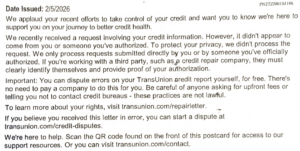
Shown below is a recent tactic used by one of the three major bureaus showing how they are declining actual investigation.
Why Accurate Credit Reporting Matters
Credit reports affect far more than the ability to obtain a credit card. Errors can impact:
- Mortgage approvals
- Auto loans
- Rental housing applications
- Employment opportunities
- Insurance premiums
- Interest rates offered by lenders
A single inaccurate entry can alter a consumer’s financial future for years if left unchecked.
According to public complaint data, millions of credit reporting complaints have been submitted in recent years without producing meaningful relief for consumers. Many complaints involve allegations of identity theft, fraudulent accounts, inaccurate balances, duplicate accounts, or improperly reported payment histories.
Concerns About the Dispute Process
Credit bureaus argue that many disputes originate from third-party organizations and may be unsupported or repetitive. Consumer advocates, however, contend that dispute systems often dismiss legitimate complaints too quickly and fail to conduct thorough investigations.
The challenge is rooted in volume. Credit bureaus process enormous numbers of disputes annually, requiring investigations into millions of reporting records. Consumer advocates and attorneys have long questioned whether the resources devoted to these investigations are sufficient to ensure compliance with the Fair Credit Reporting Act (FCRA).
When disputes are handled through automated systems or limited review processes, consumers may receive form responses indicating information has been “verified” despite evidence suggesting the reported information is inaccurate.
Enforcement Actions and Industry Scrutiny
The credit reporting industry has faced numerous regulatory actions over the years related to dispute handling practices. Federal agencies have alleged that some companies failed to conduct reasonable investigations into reported inaccuracies, while credit bureaus have denied wrongdoing and defended their procedures.
At the same time, industry groups have advocated for changes to how consumer complaints are processed, arguing that complaint systems have been overwhelmed by improper submissions and credit repair-related disputes. Consumer advocates counter that additional barriers can make it even harder for legitimate consumers to obtain assistance.
The result is an ongoing debate over how to balance efficiency with consumer protections.
When Consumers Run Out of Options
For some consumers, repeated disputes produce no meaningful results. Even after submitting supporting documentation directly to creditors, credit bureaus, and government agencies, inaccuracies can remain.
When that occurs, legal action may become the only practical path forward.
The Fair Credit Reporting Act gives consumers important rights when credit reporting agencies fail to maintain accurate information or conduct reasonable investigations of disputed accounts. In some cases, consumers may be entitled to seek damages and require corrections through litigation.
How Credit Law Center Helps
At Credit Law Center, we help consumers challenge inaccurate, misleading, and incomplete information appearing on their credit reports. When traditional disputes fail, our legal team evaluates whether credit bureaus, furnishers, or other parties have violated the Fair Credit Reporting Act or other consumer protection laws.
Consumers should not have to spend months or years proving that obvious errors are incorrect. Accurate credit reporting is not a luxury; it is a legal requirement that affects access to housing, financing, employment, and financial opportunity.
As regulatory oversight continues to evolve, it becomes even more important for consumers to understand and enforce their rights. When credit reporting errors stand between you and your financial goals, legal remedies may be available.
If you’ve disputed inaccurate information and received no meaningful resolution, Credit Law Center can help evaluate your options and protect your rights under federal credit reporting laws.
